-
How Fast Can I Get a Bulk Industrial Sealant Order Delivered?
-
What Should an Industrial Sealant Wholesale Cost Guide Actually Tell You?
-
Is Architectural Coating OEM Worth It for a Mid-Size Contractor?
-
Why Do “IPG Fiber Laser” and “IPG Laser Welding Machine” Keep Coming Up in a Sealant Search?
-
What’s the Biggest Mistake a Buyer Makes on a Rush Order?
-
What Does Architectural Coating OEM Really Cost, Ballpark?
-
When Should I Not Use One Supplier for Everything?
Questions I hear when someone is already behind: How fast can I get bulk industrial sealant? What does an architectural coating OEM really cost? And why do “IPG fiber laser” and “IPG laser welding machine” keep showing up in a building materials search? I coordinate expedited sourcing at IPG, and I’ve handled 200+ rush orders in six years. Here are my direct answers.
How Fast Can I Get a Bulk Industrial Sealant Order Delivered?
If you’re asking that when the job is already behind, the honest answer is: it depends on how flexible you are on spec. A standard 55-gallon drum of a common industrial sealant usually has a 3-to-5-day lead time. A specialty bulk industrial sealant—fire-rated, chemical-resistant, or color-matched—can take 10 days or more, and no amount of begging changes that.
In March 2024, a client called at 3:30 p.m. on a Thursday. They needed 60 pails of a standard polyurethane sealant for a project that had to pass inspection on Saturday. Normal turnaround was five days. We found a manufacturer with open line time, paid $1,180 in expedite fees on top of the $7,200 base, and got it there by Friday noon. The client’s alternative was a $50,000 penalty clause.
The real lesson: time isn’t the problem. Available capacity and spec flexibility are. If you can accept a comparable product with the same performance rating, you have options. If you can’t, you’re paying for a miracle.
What Should an Industrial Sealant Wholesale Cost Guide Actually Tell You?
Most wholesale cost guides give you a price range and stop. That’s like giving someone a fuel range without telling them the vehicle class. What I tell buyers: get the price per gallon, the container cost, minimum order quantity, and any same-spec alternatives before comparing.
As of early 2026, standard polyurethane bulk industrial sealant is in the $18–$35 per gallon range, depending on volume, curing chemistry, and compliance paperwork. Fire-rated or chemical-resistant formulas can run $45–$70. Those numbers are from quotes we’ve pulled for clients, not a magical national dataset. Verify current pricing because resin costs move fast.
The conventional wisdom is to always get three quotes and take the lowest. My experience with 200+ rush orders suggests that relationship consistency often beats marginal cost savings. The vendor who knows your spec and doesn’t charge you for re-explaining it is usually cheaper in the long run.
Is Architectural Coating OEM Worth It for a Mid-Size Contractor?
I get this question a lot. My short answer: yes, if you’re ordering enough volume and you’re not expecting the OEM to fix sloppy specs.
Architectural coating OEM means a manufacturer produces a coating formula under your brand or spec. It makes sense when you want a consistent finish across projects, need a private-label product, or have a performance requirement that off-the-shelf doesn’t hit. It doesn’t make sense if you’re looking for a cheap bucket of paint. A custom batch means formulation, testing, and first-article approval. That takes time—usually 2 to 4 weeks just for samples.
One thing people overlook: claims. Per FTC guidelines (ftc.gov), if you’re going to call a coating “low-VOC” or “recyclable,” you need the evidence to back it up. I don’t have hard data on industry-wide defect rates, but based on first-article inspections over five years, my sense is about 10% of low-cost coating samples have a color or gloss mismatch. That’s why you pay for a reputable architectural coating OEM partner.
Why Do “IPG Fiber Laser” and “IPG Laser Welding Machine” Keep Coming Up in a Sealant Search?
Because “IPG” is two different things in the industrial world, and it’s easy to mix them up.
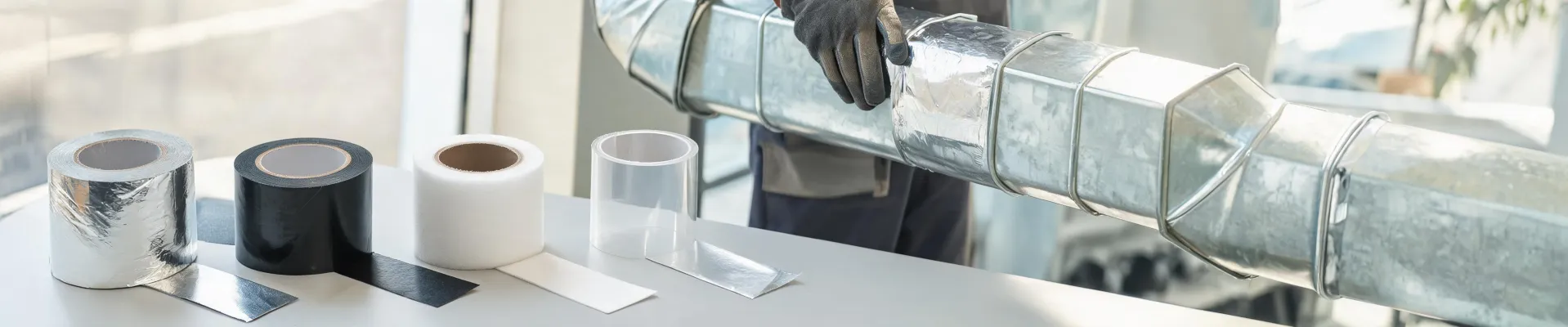
I work for IPG, the building materials supplier. We make and source sealants, coatings, tapes, waterproofing, and HVAC components. IPG Photonics makes fiber lasers. If you’re an HVAC fabricator or metal panel shop, you might need an IPG fiber laser or an IPG laser welding machine for precise metal welds. That’s a completely different supply chain.
In my role, when a client asks if we can source laser equipment too, I say no. That’s not our strength. I’d rather point you to someone who actually knows fiber laser welding than pretend we can handle it. This is the boundary that keeps projects from going sideways. A vendor who says “this isn’t our area—here’s who does it better” earns my trust for everything else.
What’s the Biggest Mistake a Buyer Makes on a Rush Order?
Trying to save money first, expedite later. In 2023, we lost a $28,000 contract because we tried to save $900 on a standard sealant order instead of using a vendor we already knew. The cheaper floor stock had the wrong cure time, and the site crew had to wait. That’s when we implemented our “confirm before you rush” policy.
We also didn’t have a formal approval chain for expedite requests back then. It cost us when an unauthorized rush fee showed up on an invoice. Now every rush order has a one-line sign-off. The third time a rush order went sideways, I finally created a checklist. I really should have done it after the first.
The bottom line: if you’re under a deadline, make decisions in this order—time, feasibility, risk. Price is last. That’s not a popular answer, but it’s the one that keeps the $50,000 penalty clauses away.
What Does Architectural Coating OEM Really Cost, Ballpark?
Ballpark is all I can give you, because so much depends on chemistry, volume, and whether you need testing. A basic private-label acrylic/latex coating OEM run might land between $1,200 and $5,000 for formulation and small-batch first articles, with production pricing around $10–$25 per gallon at 100-gallon scale. Higher-performance polyurethane or fire-rated systems start higher—$18–$40 per gallon. If you need UL documentation or third-party testing, add time and money.
And here’s the penny-wise lesson. We once saved $2,400 on a low-cost coating batch, then spent $11,000 on reapplication and a failed punch list when the gloss didn’t match the approved sample. The “budget OEM” choice looked smart until we saw the actual product under natural light (unfortunately).
My experience is based on orders we’ve run for commercial contractors, mostly in North America. If you’re sourcing overseas or working with niche chemistry, your numbers will be different. Use these ranges as a starting point, not a promise.
When Should I Not Use One Supplier for Everything?
When “one supplier” turns into “one supplier who can’t admit their limits.” I’m a big believer in one-stop sourcing for routine items. It saves admin time and freight. But if you need a specialty bulk industrial sealant, a custom architectural coating OEM, and an IPG fiber laser welding machine in the same week, you’re dealing with three different fields. No serious supplier should pretend otherwise.
I’d rather work with a specialist who knows their limits than a generalist who overpromises. Good vendors tell you what to find elsewhere. That’s not a lack of capability—it’s respect for your project. It’s also a red flag if a supplier says “we can do absolutely everything” without naming who will actually formulate, test, or weld. Ask for the specific person who owns the process.
Keep a short list: one trusted source for sealants and coatings, one for laser fabrication, one for legal and code review. That’s not complicated. It’s how you avoid the middle-of-the-night “did they really just say they can’t do it?” call.