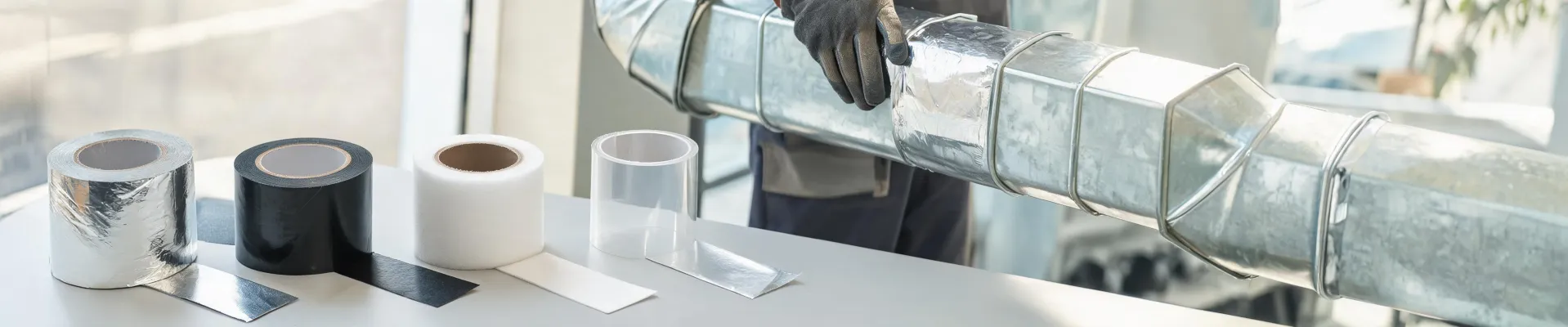
No One-Size-Fits-All Answer for Vapor Barrier Sourcing
I've been handling vapor barrier and waterproof membrane orders for 9 years. I've personally made (and documented) 7 significant mistakes, totaling roughly $23,000 in wasted budget. Now I maintain our team's checklist to prevent others from repeating my errors.
If you're looking for ipg fiber laser or scs ipg replacement, you're on the wrong page—those are photonics products. This guide is for IPG building materials: vapor barriers, waterproof membranes, sealants, and related B2B supplies. If you're sourcing those, keep reading. The question 'which supplier is best?' doesn't have a single answer. It depends on your scenario.
Most buyers focus on the quoted unit price and completely miss the total cost of ownership. That's the outsider blindspot. The right choice for a private label program is different from the right choice for a one-off project or a distribution portfolio.
Here are three scenarios I've seen repeatedly.
Scenario A: You Need Private Label Vapor Barriers for Your Own Brand
You're a distributor or contractor who wants to sell vapor barriers under your own name. You need a vapor barrier manufacturer that can do private label without turning your launch into a paperwork nightmare.
It's tempting to think you can just compare unit prices. But identical specs from different vendors can result in wildly different outcomes. I learned this in September 2022. I submitted a private label order for 5,000 rolls of 4-mil vapor barrier. It looked fine on my screen. The result came back with a thickness tolerance that was technically within spec but at the low end. Contractors noticed. We had to offer discounts. 5,000 rolls, about $3,200 in margin, straight to the trash. That's when I learned to check the actual test reports, not just the spec sheet.
What to look for:
- Existing tooling: Does the manufacturer already have your desired width and roll length? Custom tooling can add $2,000–$5,000 and 4–6 weeks.
- Minimum order quantity (MOQ): Private label MOQs can range from 1,000 to 20,000 rolls. Don't assume you can start small.
- Compliance documentation: Ask for ASTM E96 perm ratings, thickness tolerance reports, and batch traceability. If they can't provide it, walk away.
- Printing and branding: Confirm that logo printing doesn't weaken the membrane or affect adhesion.
Counterintuitive advice: Sometimes paying 8–12% more per roll is cheaper if the manufacturer already runs your spec daily. The efficiency of not waiting for custom runs can save you more than the unit price difference. I've seen a $0.03/roll premium save $1,800 in expedited freight and delayed launch costs.
Efficiency matters here. A manufacturer with an online portal for order tracking and spec sheet downloads can cut your admin time by half. That's not a luxury—it's a competitive advantage.
Scenario B: You're Writing a Waterproof Membrane Distributor Buying Guide for Your Team
You're building a distribution portfolio. You need a repeatable process to evaluate waterproof membrane manufacturers. This is where a waterproof membrane distributor buying guide becomes essential.
I once went back and forth between two vendors for two weeks. The established vendor offered reliability. The new one offered 25% savings. I ultimately chose reliability because the project was too important to risk. But I learned something: the decision wasn't just about price. The established vendor had a portal where I could download batch certificates in 30 seconds. The new vendor required email requests and 2-day waits. That admin friction cost us more than the savings.
What to evaluate:
- Quality consistency: Ask for 3 recent batch test reports. Look for variance in thickness, tensile strength, and adhesion.
- Lead times and fill rate: What's the on-time delivery rate? Get it in writing.
- Documentation: Can they provide ICC-ES reports, ASTM D4434 compliance, and low-temperature flexibility data?
- Environmental claims: Per FTC Green Guides, environmental claims like 'recyclable' must be substantiated. A product claimed as 'recyclable' should be recyclable in areas where at least 60% of consumers have access. Don't repeat marketing claims without evidence.
- Portal and automation: Does the manufacturer have an online ordering and tracking system? This reduces data entry errors and speeds up reorders.
I have mixed feelings about automated portals. On one hand, they eliminate the 'where's my order?' emails. On the other, they can make it harder to negotiate custom runs. I compromise by using the portal for standard reorders and keeping a direct contact for special projects.
One more thing: don't ignore the value of a backup vendor. During the 2021 supply chain crunch, our primary membrane vendor couldn't ship for 6 weeks. Our backup saved a $50,000 project. The backup cost us 5% more on paper, but that redundancy paid for itself.
Scenario C: You Need a Specific Replacement or Project Spec Match
You're a contractor or specifier who needs a waterproof membrane that matches a project spec. Maybe you're replacing a discontinued product. You might even be searching for scs ipg replacement—but again, that's a different IPG. For building materials, the scenario is: you need a membrane that meets or exceeds the original performance.
The question everyone asks is 'what's your best price?' The question they should ask is 'what's included in that price?' I learned this the hard way in Q1 2024. We used a generic membrane to replace a branded one on a 200-unit order. It met ASTM D4434 on paper. But the adhesion failed at 40°F. We had to redo 47 units. That error cost $890 in redo plus a 1-week delay. The lesson: check low-temperature flexibility and adhesion tests, not just the headline spec.
For this scenario:
- Match performance, not brand: Use ASTM E96 for vapor permeance, ASTM D4434 for PVC sheets, and ASTM D412 for tensile strength.
- Request samples: Test adhesion on your actual substrate at expected temperatures.
- Verify warranty: Does the manufacturer warrant the membrane for your specific application? Don't assume.
- Check availability: A perfect spec that takes 12 weeks to ship is useless if you need it in 3.
There's something satisfying about finding a replacement that meets spec and arrives on time. After the adhesion disaster, we created a pre-check list. We've caught 47 potential errors using this checklist in the past 18 months. That's the payoff.
How to Determine Which Scenario You're In
Ask yourself these three questions:
- Are you selling under your own brand? If yes, you're in Scenario A. Focus on private label MOQs, tooling, and branding.
- Are you building a long-term distribution portfolio? If yes, you're in Scenario B. Focus on quality consistency, documentation, and portal efficiency.
- Are you solving a specific project or replacement need? If yes, you're in Scenario C. Focus on performance matching, samples, and lead times.
If you're in more than one, prioritize the one with the highest risk. For most B2B buyers, a failed project costs more than a few cents per roll.
Let me rephrase that: the lowest quoted price often isn't the lowest total cost. The lowest total cost is the supplier that helps you avoid mistakes, delays, and rework.
Efficiency is competitiveness. Whether you're private labeling vapor barriers or sourcing waterproof membranes for distribution, the right process—checklists, digital portals, and verified specs—will beat a purely price-driven approach. But don't automate away the relationship. The best vendors still answer the phone when something goes wrong.
That's the balance I've landed on after 9 years and $23,000 in mistakes. I hope your checklist is shorter than mine.