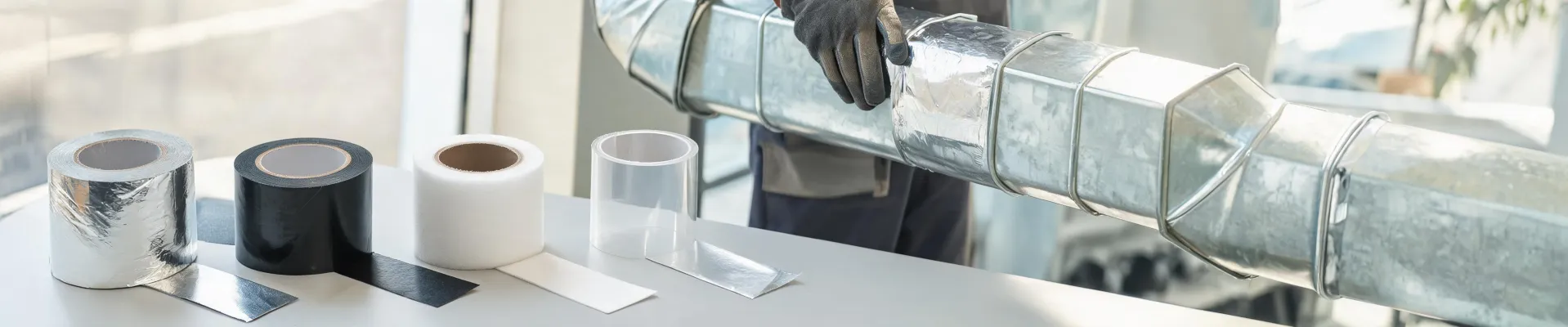
I've been handling protective coating and moisture barrier orders for 9 years. I've personally made and documented 7 significant mistakes, totaling roughly $42,000 in wasted budget. Now I maintain our team's checklist to prevent others from repeating my errors. Today I'm going to compare two sourcing paths: a specialized protective coating manufacturer with OEM/private label support (like IPG) versus a general distributor. The goal is to help you decide which one fits your project.
Before we start, let's clear one thing up. If you're searching for 'ipg' and land on IPG fiber laser or an IPG water activated tape machine, that's a different company. IPG in building materials is a protective coating manufacturer and moisture barrier sourcing partner. Different industry, same acronym. Now, let's get into the comparison.
Why Compare These Two Options?
When you need waterproofing membranes, sealants, protective coatings, industrial tapes, or HVAC components, you basically have two sources: go direct to a manufacturer that specializes in these products, or go through a distributor that carries many brands. The upfront price difference can be 10-20%. But the total cost of ownership—including failed inspections, rework, and delays—can flip that math entirely.
Here's the thing: most buyers focus on unit price. I did too. My initial approach was completely wrong. I thought the lowest quote was always the best choice. Three budget overruns later, I learned about total cost of ownership. So I'm writing this to save you that pain.
Dimension 1: Specification & Compliance Support
Manufacturer (IPG): They have in-house tech teams. They can provide ASTM test reports, help with submittals, and advise on local building codes. For example, they'll tell you if your moisture barrier needs to meet ASTM E96 for water vapor transmission. They can also review your project specs and suggest the right membrane thickness or sealant type.
General Distributor: Often just passes through datasheets. They may not have a technical person on staff. If you ask about compliance, they might say, 'It meets code' without documentation. Sometimes they'll forward you to the manufacturer's 800 number—which is fine, but slower.
Winner: Manufacturer, for complex projects. But here's the counterintuitive part: a distributor who specializes in your region might actually know your local code better than a national manufacturer. So don't assume. Ask specific questions: 'Can you provide a current ASTM E96 test report for this batch?' If they hesitate, that's a red flag.
Dimension 2: Moisture Barrier Sourcing Capability
Manufacturer (IPG): Can custom-formulate. Control thickness. Offer peel-and-stick or fluid-applied. They can match your exact spec and keep batch consistency. This matters because a 10% thickness variation can fail a moisture test. They also source raw materials directly, so they know if a supplier changes a resin or adhesive.
General Distributor: Limited to catalog items. They may substitute a different brand without telling you. In 2021, I ordered 10,000 sq ft of moisture barrier from a distributor. The first batch was perfect. The second batch was 15% thinner. We caught it when the inspector flagged it. That error cost $3,200 in redo plus a 1-week delay. I still kick myself for not documenting the thickness requirement in the purchase order. If I'd gotten it in writing, we'd have had grounds to dispute the charge.
Winner: Manufacturer, for any project where moisture barrier performance is critical. For a small shed, a distributor's catalog item is fine. But for commercial roofing or foundation work, you want control.
Dimension 3: OEM/Private Label Flexibility
Manufacturer (IPG): Supports OEM/private label. You can put your brand on the coating, custom packaging, even tweak the formulation. MOQs are usually reasonable for B2B. They can also produce your own line of industrial tapes or sealants under your label.
General Distributor: Rarely offers private label. If they do, MOQs are high and lead times are long. They're just relabeling someone else's product anyway. You won't get formulation changes.
Winner: Manufacturer, easily. If you're a distributor or contractor who wants to build your own brand, this is a no-brainer. But if you just need 50 rolls of generic tape by Friday, a distributor is faster.
Dimension 4: Total Cost & Risk
Manufacturer (IPG): Higher unit price. But lower total cost if you factor in fewer failures, compliance support, and batch consistency. For a $50,000 project, paying 15% more upfront to avoid a $10,000 rework is a good trade. They also help you avoid costly spec mistakes before you order.
General Distributor: Lower upfront. But hidden costs: wrong spec, late delivery, no tech support. I once calculated the worst case: complete redo at $3,500. Best case: saves $800. The expected value said go for it, but the downside felt catastrophic. I went with the distributor. We lost $2,700. Not catastrophic, but I wouldn't do it again.
Winner: Depends on risk tolerance. For low-stakes, low-volume, distributor wins on price. For high-stakes, manufacturer wins on total cost.
What to Look for in a Protective Coating Supplier
Whether you choose a manufacturer or distributor, here's my checklist. I've caught 47 potential errors using this list in the past 18 months.
- Test reports: Ask for ASTM or ISO test reports. Not just 'meets code.'
- Batch consistency: Can they guarantee the same formulation across orders?
- OEM capability: Do they offer private label? What's the MOQ?
- Moisture barrier sourcing: Can they source custom thicknesses or adhesive types?
- Lead times: Get them in writing. Verbal promises mean nothing.
- References: Ask for 2-3 B2B customers with similar projects.
If a supplier can't answer these, that's a deal-breaker for me.
Selection Advice: When to Choose Which
Look, I'm not saying manufacturers are always better. Here's the honest limitation: IPG is not for everyone. If you need 100 rolls of standard industrial tape by tomorrow, call a distributor. IPG won't be your fastest option. But if you're dealing with a commercial waterproofing project that requires ASTM D6134 compliance, custom thickness, and private label branding, IPG is a strong fit.
Here's the thing: 80% of projects can go either way. The 20% that go wrong almost always involve a missing spec, a verbal promise, or a substituted material. So the real question isn't 'manufacturer vs distributor.' It's 'how much risk can you tolerate?'
Bottom line: For high-volume, compliance-critical, or branded products, go with a protective coating manufacturer like IPG. For low-volume, generic, urgent needs, a distributor is fine. Just get everything in writing. And always verify the batch.
I hope my $42,000 in mistakes saves you at least a few thousand. If you're sourcing moisture barriers or protective coatings, put the checklist to work. It's not glamorous, but it works.