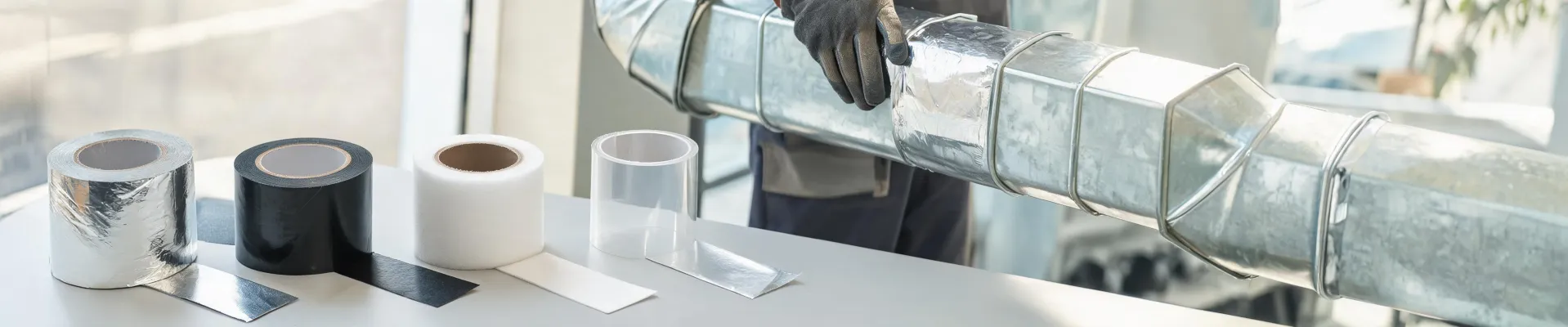
I'm the quality and compliance manager at IPG. I review every waterproofing membrane, vapor barrier, elastomeric coating, industrial tape, and HVAC component before it reaches customers. That's roughly 200 unique items every year. I've rejected about 11% of first deliveries in 2025 due to spec deviations that should've been caught long before they reached my desk.
I'm not proud of that number. But I've stopped being surprised by it.
Here's what I believe after over four years in this role: prevention beats correction, every single time. The cost of catching a problem early is a fraction of the cost of fixing it later. That sounds obvious. But most of the industry still operates on a fix-it-later philosophy—ship it fast, hope it holds, argue about responsibility when it doesn't.
I'd rather reject a batch at our dock than watch a customer rip out a failed assembly after 18 months.
The $22,000 Vapor Barrier OEM Lesson
In 2023, we received a batch of 2,000 square meters of vapor barrier OEM material where the permeance rating was visibly off. Measured permeance was 0.15 perms against our specified 0.05 perms. Normal tolerance for that spec is ±10%. The vendor claimed it was "within industry standard."
It wasn't. ASTM E96 is straightforward about how to measure permeance, and the vendor's own test data didn't support their claim.
We rejected the batch. The vendor pushed back, asked for a re-test, and presented cost data showing that accepting the material would be more economical than waiting. The spreadsheet argument made sense. My gut said no. We ran an independent re-test—still 0.15 perms. The vendor redid the batch at their cost.
But we still lost two weeks of lead time, and one customer's project schedule slipped because we wouldn't release material we didn't trust. All told, that single deviation cost roughly $22,000 in handling, expediting, and a slow-to-recover client relationship.
The frustrating part: the vendor could've caught the issue with a $200 test at their facility. The material wasn't "accidentally" off-spec. Someone skipped a verification step because it would've slowed the production line.
Even after we rejected that batch, I kept second-guessing. Were we being too strict? Would the material have performed fine in the field? The two weeks until the replacement arrived were stressful. Then the replacement came back at 0.05 perms, exactly to spec. I realized the original vendor could've done that from the start—they just didn't see a reason to.
I only fully believed in upfront verification after that experience. Everyone had warned me to check specs before approving. I didn't listen until skipping that check meant living through a $22,000 mistake.
Spec Sheets Are Not Suggestions
This pattern repeats across product categories. We publish our elastomeric coating catalog with specific requirements: drying time, dry film thickness, coverage rate, service temperature. And yet, buyers substitute a "similar" product based on a brochure photo and a lower price.
Last year, I ran a comparison test with our technical team. Same elastomeric coating, applied at the specified 20 mils vs. a "close enough" 14 mils. The thinner coat looked identical on day one. After eight weeks of accelerated weathering, the difference was obvious: cracking, adhesion loss, and about a 30% drop in measured elongation. The thinner coating saved roughly 8% on material cost. It failed in less than a year.
I don't have hard data on how many field failures trace back to spec substitutions like that. What I can say anecdotally, after reviewing hundreds of products across our waterproofing, coating, and tape lines: it's almost never the product that fails. It's the spec. Someone made a decision that seemed reasonable at the time, and nobody verified it against the actual requirement.
A coating that's 5 microns too thin doesn't fail on day one. It fails on day 400. By then, nobody remembers who approved the deviation.
The same logic applies to our IPG tape products. The most common spec deviation we see is shelf-life compliance. Tapes look harmless until an expired adhesive fails in a seam. That's not a dramatic failure. It's a slow, invisible one that turns into callbacks six months later.
Air Handling Unit OEM vs. Private Label
Here's where I'll say something that surprises people: when the topic of air handling unit OEM vs private label comes up in procurement meetings, I generally lean toward private label. Not because OEM products are worse. Because the QA protocol is fundamentally different.
With an OEM unit, you're trusting their QC process. With private label, we control the acceptance criteria. We define what gets inspected, how it gets measured, and what constitutes a pass. That clarity is valuable—especially in equipment where a failure means downtime and service calls, not just a material swap.
This runs against conventional procurement wisdom, which treats OEM as the default safe choice. In my experience, private label often yields better outcomes because the buyer is forced to define quality explicitly. You can't wave at the brand and hope for the best. The contract includes performance verification, and we run it.
At least, that's been my experience with B2B purchasing in consistent volumes. If you're buying one-off units, OEM makes more sense.
Precision Is Contagious
When I joined IPG, I was surprised that the same precision mindset from our IPG fiber laser division applied to building materials. At first, that felt excessive. A waterproofing membrane isn't exactly a laser. But the discipline is kinda the same.
Then I looked at the warranty claims.
Products that generate the most claims aren't necessarily the "cheap" ones. They're the ones where someone decided to skip a verification step—no incoming inspection, no sample retention, no testing. It took me about four years and roughly 800 inspections to understand that the expensive failures are the ones you didn't look for.
"I Don't Have Time to Check Everything"
I hear this objection a lot. My answer: you don't need to check everything. You need to check the right things.
In our experience, about 80% of deviations fall into five categories: thickness, cure time, shelf life, labeling, and permeance. That's a manageable checklist. A focused inspection routine on those items catches most problems before they get expensive.
The objection I hear next is: "our suppliers won't agree to additional testing." Sometimes that's true. But we've also found that vendors respond to clear requirements. The vapor barrier vendor that pushed back in 2023? Their current contracts include permeance testing as a standard step. The change cost them a little time and very little money. It also meant they stopped shipping us product we'd reject.
I wish I had tracked every hour I've spent on inspections since 2021. What I can say, roughly, is that every hour of incoming verification has saved me at least four hours that would've gone into returns, rescheduling, and explaining to a customer why an installed product isn't going to last as long as promised.
Bottom Line
I do not expect every batch to arrive perfect. I expect vendors to check before shipping, and I check after receiving. When both sides take that seriously, the 11% rejection rate drops fast—and the field failure rate drops even faster.
Five minutes of verification beats five days of correction. That's not a slogan. It's the conclusion I've reached after reviewing hundreds of products across our vapor barrier, coating, tape, and HVAC lines. It's the reason I'd rather be called an inconvenient inspector than a convenient one.
Prevention isn't paranoia. It's the cheapest insurance we buy.