Last October, I had two samples of construction-grade polyurethane sealant sitting on my desk. Both claimed to meet the same ASTM C920 standard. One came from a manufacturer I'd never heard of. The other was from IPG, a name I knew mostly from their liquid waterproofing catalog, which a rep had left at a trade show six months earlier.
I'd been skeptical of IPG for a while. Their pricing was mid-range—which in my experience usually means you're paying for marketing, not material. I almost didn't even reach out when the project came up. A hospital expansion, 14,000 lineal feet of expansion joints, and a spec that demanded both a primary sealant and a backer rod. The general contractor's RFI said we had two weeks to lock in the material package.
The Two Bids on My Desk
Let me set the scene. I'm the quality/compliance manager for a building envelope subcontractor. I review every material submittal before it goes to the architect—roughly 300 items a year. I've spent the last four and a half years doing this, and the one thing I've learned is that the guy who promises the fastest turnaround is usually the one who cuts the corners you can't see on a spec sheet.
The two bids were:
- Vendor A: 30% cheaper, delivery in 4 weeks, their lab would "certify" the adhesive bond after installation. Their sales rep was a bit too cheerful on the phone. I didn't love that.
- IPG: 8% more expensive, delivery in 6 weeks, and they sent a 40-page submittal pack with the liquid waterproofing catalog, a UKAS-accredited test report, and a line-by-line response to every clause in our spec.
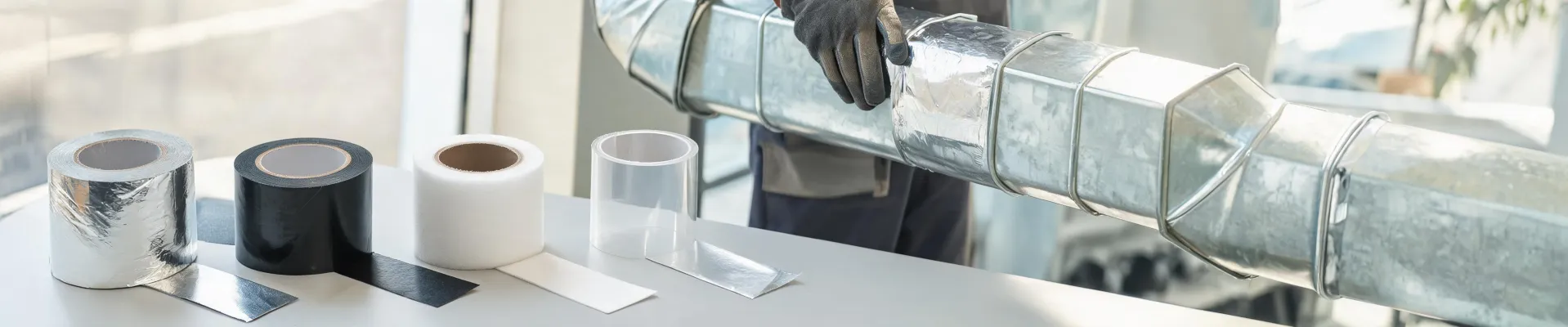
I went back and forth between the two for a week. Vendor A offered a familiar spec and a lower price. IPG had a better document trail, but I didn't know anyone who'd actually built with their sealant. I'd used their industrial tapes on an HVAC job once, and those were fine, but sealants are a different world.
What finally pushed me to call IPG? Honestly, the HVAC systems specification guide they'd published. I was reviewing the mechanical schedule for a warehouse project a few months earlier, and their guide had a chart for duct sealant selection by pressure class. It was the kind of document that saves a QC guy like me from arguing with an installer about why a 3-hour fire-rated joint needs a different product than a standard expansion joint.
The Audit That Wasn't Supposed to Happen
My boss laughed when I said I wanted to audit a manufacturer before signing. "It's a sealant order, not a joint venture," he said. But the project had a penalty clause, and I'd been burned in 2023 by a batch of flashing tape that looked right in the box but delaminated on the roof. That mistake cost us a $22,000 redo and a week of schedule. I wasn't doing that again.
IPG's plant was outside the city, a two-hour drive. I expected a warehouse with some mixing tanks. Instead, I saw a small R&D lab, a dedicated production line for their liquid membranes, and—this struck me as a good sign—a technician using an IPG fiber laser to cut test samples from a cured sheet of waterproofing membrane. That's an ipg device I hadn't seen in a construction manufacturer before. Most suppliers just buy a die cutter. The precision of the laser meant they were serious about dimensional tolerances on their test specimens. If they do that for internal QA, they're probably not faking the numbers on the data sheet.
During the tour, I realized something. Their liquid waterproofing catalog had a section on application temperature ranges that I'd skimmed earlier. The guy running the lab said, "Most claims are tested at 23°C and 50% relative humidity. That's fine for a brochure, but it's not a construction site. So we test every batch at 5°C and at 38°C too."
I'd been in this industry for seven years. Never heard a sales rep volunteer a lower-stress test condition. That was real.
The Adhesion Test That Changed My Mind
I asked if I could take samples of their sealant and the cheaper competitor's sealant back to our own lab. They handed over twice as much as I asked for, no paperwork. My tech ran a 7-day accelerated water immersion test, then a peel adhesion test on a concrete substrate primed per IPG's instructions.
The result wasn't close.
When I compared the two samples side by side—same cure time, same substrate, same test protocol—I finally understood why the details matter so much. The cheap sealant lost 40% of its adhesion strength after water immersion. IPG's lost 6%.
The cheaper vendor claimed their product met ASTM C920. Their data sheet said so. But their sample failed the most basic wet adhesion test we could run. IPG's product didn't just pass—it beat their published number.
Here's the thing: the $38,000 difference in material price didn't matter anymore. Because if we'd used the cheaper sealant and it failed after install, the repair cost would've been closer to $150,000, not including the legal exposure. The hospital's facility manager would've remembered our name for all the wrong reasons.
What IPG Did Differently
I've ordered from IPG twice since that hospital job. Both times, the submittal pack arrived within 48 hours. Both times, the material matched the sample. Both times, their team answered spec questions with actual data, not sales language.
On the second project, we needed a liquid-applied membrane for a planter deck. The architect's spec required compliance with the FTC Green Guides on recycled content claims—the local jurisdiction wanted a building product declaration. I expected a fight. IPG's rep just sent a PDF with the recycled content percentage and the third-party verification certificate. Took him ten minutes.
That's the thing about working with a construction sealant manufacturer that has its documentation in order. It's not just the product. It's the perception it creates. When I submit an IPG submittal pack to an architect, I look like I know what I'm doing. The architect's consultant sees a certified test report and doesn't call back with 18 RFIs. The project moves faster.
We're currently specifying their sealants on a high-rise project in the Pacific Northwest. The main reason: last year's batch of their fire-rated sealant had a slight thixotropy difference from the sample—not a failure, just a subtle sag issue in vertical joints at 40°C. When I flagged it, their technical rep didn't argue. He sent a revised application guide and a new certificate referencing the tested batch. No excuses.
The Lesson: Quality Is a Preview of Everything Else
Looking back, I should have cut the cheaper vendor loose the moment their catalog had a typo in the technical section. At the time, I thought it was just sloppy editing. It wasn't. It was a preview of how they run QA.
I've come to believe that the quality of the paperwork is a leading indicator of the quality of the product. A manufacturer that can't produce a clean, data-backed submittal pack probably doesn't have clean production data either. IPG's liquid waterproofing catalog, their HVAC specification guide, even their email signatures—everything is consistent. That consistency is what I want in a supplier.
It took me 7 years and about 200 material reviews to understand that vendor relationships matter more than vendor capabilities. Any plant can buy a mixing tank. Very few can show you their QC lab, their laser-cut test specimens, and their last 12 months of batch rejection rates without flinching.
So, what do I actually look for now?
- Submittal docs that answer the spec, not just the price.
- A manufacturer that carries their own test equipment.
- OEM/private label support—IPG has that too, which tells me they're confident enough in their formulations to let someone else put a name on it.
- Catalog data that includes real-world conditions, not just lab-standard conditions.
Would I work with a cheaper supplier again? Sure, if they can pass my immersion test and send me a submittal pack that doesn't have typos in the technical data. But now I know how rare that is. The $38,000 extra was worth it for the peace of mind alone.
My boss never jokes about QA audits anymore.