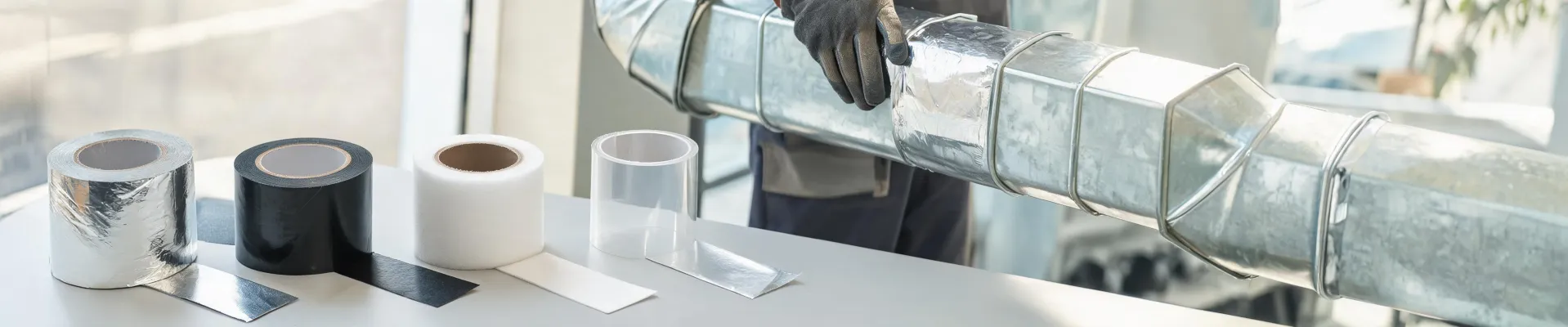
In my role coordinating supply chain for a building materials manufacturer — waterproofing membranes, construction sealant, protective coatings, industrial tapes, HVAC components — I've pushed through more than 200 rush orders in the last six years. Same-day turnarounds. Overnight freight. "Find it and get it here tomorrow" calls on a Sunday afternoon.
Almost every one of those emergencies was avoidable. Not because I'm a logistics genius. Because they were all the same emergency wearing different costumes.
If you've ever searched "how to choose construction sealant for wholesale" and ended up more confused than you started, this article is for you. If you've ever sat on a job site waiting for a moisture barrier that didn't show up, this is for you. And if you think your problem is purely about speed — fast suppliers, fast shipping, fast fixes — I'd encourage you to read to the end. The data from our rush-order history says otherwise.
What the emergency calls actually look like
The call usually sounds like this: "We need sealant on-site by Friday. Can you do it?"
It's Thursday. Maybe Wednesday. Once it was 7 AM on a Monday for a Tuesday morning installation. The ask is simple. The panic is real. And the caller expects me to say, "No problem, I'll make it happen."
Most of the time, we do. But after the phone clicks, I pull up the order history and take a look. And here's the pattern I've seen over and over:
The product was wrong. Or the quantity was wrong. Or someone ordered "waterproofing" when the project actually needed a waterproofing membrane plus a specific sealant — and those aren't interchangeable. The delivery date was just the moment when those mistakes turned into someone else's emergency.
The surface problem, the one the caller names, is time. The deeper problem, almost every single time, is specification.
The problem isn't speed. It's spec.
Here's what took me years and dozens of rushed orders to understand: construction sealant is one of the most spec-sensitive products in the built environment. You don't choose it by color. You don't choose it by "how strong it feels." You choose it by substrate compatibility, joint movement capability, Shore A hardness, modulus, cure time, weather resistance, water exposure — the list goes on.
Yet most wholesale buyers treat it as a commodity.
I once saw a contractor order 40 cases of high-modulus sealant for a job that needed low-modulus flexibility. Same color. Similar texture. Completely different performance. It was a bulk basement waterproofing project — a foundation application, not a surface dab. The sealant went in on day 45 of a 60-day timeline. On day 50, it started cracking under joint movement. They scraped it out and reapplied. Removal labor costs several times the price of the product itself.
That contractor didn't need a faster vendor. He needed someone to ask: what's the project spec? What's the joint depth? What's the substrate? Is water pressure a factor?
The gap isn't speed. The gap is that most buyers don't know which questions to ask — and most suppliers don't ask them either. They just move product.
The most frustrating part of this pattern? You'd think written specs would prevent it. But interpretation varies wildly between contractors, purchasing teams, and vendors. "High-performance" means different things to different people.
Here's a concrete example from last year. A facilities contractor called on a Tuesday needing a fast-curing sealant for a parking garage joint. The spec called for a hybrid sealant with 50% joint movement capacity. The contractor asked for "whatever's in stock and white." We pushed back, shared the performance data, and they paid about $400 more for the right product. The garage was sealed that weekend. No callback. That's the calmer world I want more buyers to live in.
What the wrong sealant actually costs
Let's put numbers on this, because the conversation changes when it's quantified.
A standard wholesale order of a decent polyurethane construction sealant — say 40 cases for a commercial job — runs about $3,000 to $5,000. Standard lead time is five to eight business days. Freight is manageable.
The same order on an emergency basis? You're paying 30-50% more per unit, because you don't get to choose from the full catalog. You take what's in stock nearby. Plus expedited freight, which can add $400 to $1,500. Plus split shipments from multiple vendors if nobody has enough. Plus your own internal firefighting time.
But the markup on product and freight is small next to the cost of getting it wrong.
A few years back, I watched a client eat a $50,000 penalty because a replacement sealant didn't arrive in time. The original product cost $2,800. They'd saved $400 by picking an off-spec alternative. I'll repeat that: $400 in savings, $50,000 in damages.
That's not a supplies problem. That's a procurement strategy problem.
Then there's labor. When sealant fails, you lose more than the tube. You lose the crew time to apply it, the crew time to remove it, the inspection reschedule, the project delay, and the legal exposure if a water test fails after the walls are closed. The real cost of a cheap sealant is what happens after it fails.
There's also the quiet cost nobody tracks: repeat-callback risk. When a product fails under warranty, the contractor loses twice — once fixing it, once on reputation. We keep an internal list of projects where "value-priced" sealant led to callbacks. The list is long enough that I've stopped being surprised.
I'll add a compliance angle too. Per FTC advertising guidelines, performance claims like "waterproof" need to be substantiated — you can't just print the word on a label. And local building codes are an even tougher audience. A product that "meets code" for one application can be exactly the wrong choice for yours. The spec doesn't care about your schedule.
What changed when we started asking "why?"
At IPG, we made a deliberate shift in 2023. Every quote request now gets a quick spec review before it goes to pricing. Not a lecture — a conversation. Three questions minimum: what's the substrate? What's the joint depth or exposure condition? And what performance standard does the project need to meet?
It felt like overkill at first. Salespeople worried we'd slow everything down. But the results surprised us: rush orders dropped about 60% within nine months.
I'll be honest about the boundary here. This approach works for us because we're a B2B manufacturer with customers who have fairly predictable construction schedules. If you're a homeowner sealing one basement crack, this article is overkill. If you're dealing with international logistics or government procurement, there are factors I haven't touched. Your mileage may vary.
IPG may be a name you know from manufacturing floors — IPG laser systems, fiber lasers, industrial optics. The engineering DNA of those precision tools carries into our building materials division. That's why we treat spec-compatibility as quality control, not a sales obstacle.
So if you're wondering how to choose construction sealant for wholesale, the short answer is: don't start with the price sheet. Start with your project spec. Then find a moisture barrier supplier, a sealant manufacturer, or a distributor who engages with that spec — who asks what you're building, not just how many cases you want.
The fix isn't a faster supply chain
Real emergencies exist. Scope changes. Site conditions that appear on day one. Clients who need something yesterday because their timeline shifted. It happens. In those cases, you need someone who can genuinely move fast — and who has the knowledge to move fast in the right direction.
But more than half of the rush orders I've handled came from the same mismatch: product purchased by price, spec confirmed after delivery, and project schedules built without buffer.
So here's my unsolicited advice, from someone who's spent six years un-breaking sealant purchases:
- Read the actual project spec before you buy. Not the marketing sheet. The spec.
- Ask three questions before any wholesale sealant order: substrate, joint movement, exposure condition.
- Build a 48-hour buffer into anything on the critical path. Every time we've skipped it, we've regretted it.
I'm glad we made the shift when we did. We almost didn't — the old model was sell first, solve problems later. It made money in the short term. But a client who eats a $50,000 penalty because someone sold them a $400-cheaper off-spec product doesn't come back. And they tell other people.
Now go read the project spec. Before you order the sealant. You'll thank yourself when you're not making a frantic phone call from a job site.