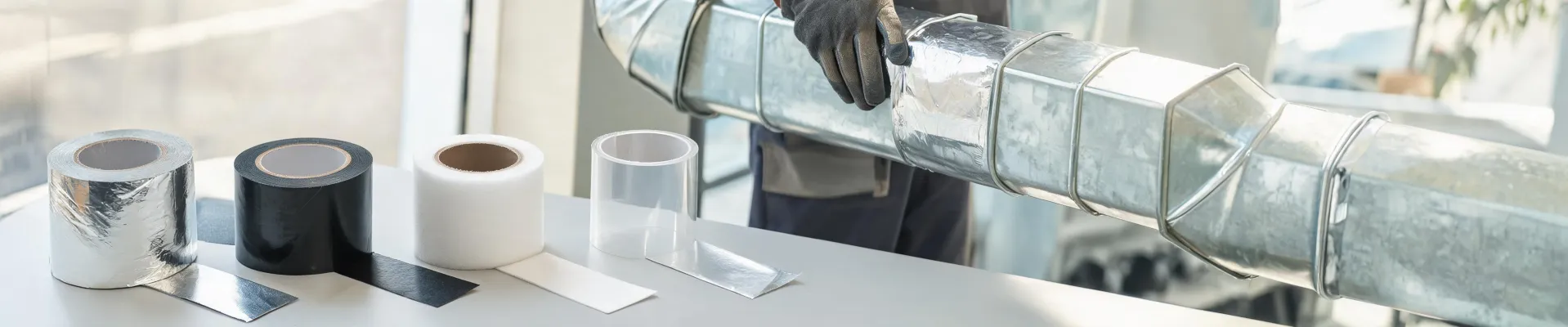
I'm the office administrator for a 180-person building products company. On paper, I handle office and facility purchasing. In practice, I buy most of the non-production supplies that keep the building running, and I report to both operations and finance. Since 2020, I've managed 60-80 orders a year. Around 70, maybe, I'd need to count. I do not have a procurement background; I have a checklist.
This checklist is for construction-grade B2B purchases where a wrong order costs more than a restocking fee. It has saved me on bulk construction sealant, vapor barrier private label, adhesive tape, and even large mechanical equipment. If you are asking what to look for in an air handling unit supplier, the framework applies there too.
Also, when I say IPG, I need to be specific. Our floor uses an IPG fiber laser for marking metal tags. A separate order might be for IPG 591 double sided tape. Searching IPG alone brings up both worlds. That is why Step 1 is the step I never skip.
Step 1: Write the spec before you pick the vendor
A construction sealant request is not a spec. Polyurethane, silicone, acrylic, and hybrid are all sold as construction sealants, but they have different cure times, movement ranges, and cleaning requirements. When I need bulk construction sealant, the request now includes one-part or two-part, ASTM C920 class and grade if the joint is commercial, color, cartridge size, and cure profile. If a vendor quotes without asking a single follow-up question, I assume the quote is a catalog number, not an application recommendation.
The name of the product matters too. IPG 591 double sided tape is a specific product, but a PO should still add roll width, liner, and adhesion requirements. When I write IPG fiber laser, I mean service parts for our marking laser. When I write IPG 591 double sided tape, I mean the tape. It sounds like common sense, but it took me one wrong phone call to learn it.
Step 2: Put any same-as proposal under a data check
The word equivalent has cost me more time than any other word. A supplier can believe their tape is equivalent because both are double sided tapes. That is not enough. Adhesive type, liner, thickness, temperature range, and shelf life all affect how the product behaves on a job site.
In 2021, I accepted a substitute for IPG 591 double sided tape because the numbers looked close on paper. The applicator saw the difference as soon as they tried to peel the liner. Since then, if a supplier wants to offer an equal product, I ask them to confirm the exact product number and send a data sheet before the order. Same as is not a spec.
Step 3: Get a real delivery date, especially for long-lead items
This is where I made my most expensive mistake. In 2023, I was asked to replace an air handling unit on our roof. The low quote came from a supplier who said the lead time was about six weeks. The other quotes were higher but had firmer dates. I chose the low quote and did not require a date in writing.
At week six, the unit was not ready. At week eight, the supplier stopped returning emails quickly. The unit finally arrived in week eleven. We had to move a crane reservation twice, and the roofing contractor charged us for the second standby day. The savings from that low quote disappeared. I also had to explain to my VP why a simple equipment replacement dragged on for an extra month.
So what to look for in an air handling unit supplier? The first thing is a committed delivery date. The second is someone who can explain the schedule for submittals and approvals. The third is a single technical contact after the order is placed, not a sales inbox that forwards everything. And the fourth is a willingness to offer expediting if the site date changes. If a vendor says probably, I now treat that as a risk, not a promise.
In March 2024, I paid about $400 extra to guarantee a delivery date on a critical component. The order was for a smaller item, not an air handling unit, but the principle was the same. In that situation, the price difference was less than one hour of downtime. It was worth it.
Step 4: Run a small batch before the bulk order
Volume pricing makes people relax too quickly. I have seen the unit price for bulk construction sealant drop by double-digit percentages when the order moves from one case to a pallet. That is exactly when I want to test first.
We once approved a new sealant vendor from a clean data sheet. A five-case test under real job-site conditions showed that the product cured too fast for our crew to tool properly. The bulk order would have created a messy installation and a callback. The test cost us a little freight and a bit of time. It saved us a lot more.
Vapor barrier private label has a similar rule. A PDF proof does not show how the roll will wind, whether the logo is straight, or how the film handles on installation equipment. Ask for a physical sample. Better yet, ask for a short production run from the actual line if the quantity is large enough. Once your name is on the product, you own the quality story.
Step 5: Vet the process behind the product
A good sample is not the same as a good supplier. Before I put a new vendor into our approved list, I check the paperwork and the technical depth behind it.
For vapor barrier private label, I ask where the product is made, which standard it is tested to, and whether I can get a report showing the permeance. If the material is sold as a vapor barrier, the data sheet should reference a test method like ASTM E96 and give a result. If the salesperson cannot answer, I ask for a technical contact. If no one can answer, I do not feel safe putting our company name on their production.
The same logic applies to supplier setup. We delayed a project in Q1 2024 because a new vendor had good product samples but an expired certificate of insurance. The product was fine. The process was not ready. Now I check those items before we issue a purchase order.
Mistakes I still make a point to avoid
- ASAP is not a date. I once told a vendor to send something as soon as possible. They interpreted that as whenever they could fit it in. I meant two days. Now I put a date on every order.
- Local is not automatically faster. A local supplier can be slower if they do not stock the item. I learned this when a nearby vendor had to order bulk construction sealant from their central warehouse and the delivery took ten days. A supplier two states away had it in stock and could have shipped the next day.
- Same as last time is not a spec. Staff changes destroy those assumptions. Keep the product number, dimensions, and test report from the original order. If you do not have it, start over.
This may feel like extra work for every order. Maybe it is. But if you buy construction materials for a company, you already know that the cheapest quote is not always the cheapest result. Uncertainty has a cost. When a delivery date matters, the vendor who can commit to that date is worth more than the one who can only tell you maybe.