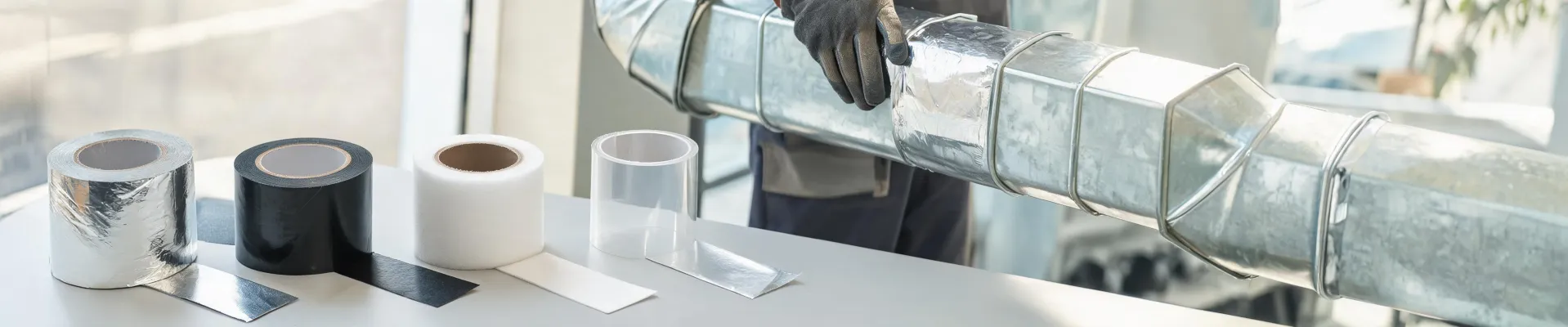
Thursday afternoon, 3:17 p.m. A client is standing in a half-excavated basement. The soil is wet. The inspection is Friday. The original waterproofing distributor just called to say the membrane cannot be here until next Tuesday. This is where I usually get introduced.
I coordinate rush material orders for building projects. Last quarter alone, we processed 47 rush orders with 95% on-time delivery. Honestly, that number sounds better than it is—a lot of those orders only became emergencies because somebody needed a product instead of a system.
Maybe you found this page from a search for IPG fiber laser specs and you are wondering where the lasers are. This is a different IPG, or at least a different conversation. But it connects: a fiber laser is specified by beam quality, power, and service support. A basement waterproofing assembly deserves the same seriousness. It rarely gets it.
The surface problem: the product isn't the problem
When a contractor calls and says, “I need a basement waterproofing distributor,” what they usually mean is, “I need the black roll stuff here by Friday and I don't want to think about it again.” I understand. I made the same assumption early in my career.
In my first year, I assumed a distributor is a distributor. They all stock membranes, sealants, and tape. So I picked the one with the lowest number on the quote and didn't check the adhesive spec. That mistake cost me a $600 redo and a horrible 36 hours before the next pour. The membrane did not bond well, the laps curled, and the site manager looked at me like I personally invented the groundwater.
Here is what I learned: a basement waterproofing product is not a standalone thing. It is a system. You have substrate, primer, membrane, termination bars, protection board, drainage, and backfill. When you buy by category instead of by system, you end up with pieces that do not talk to each other.
Take the term “waterproofing” itself. In many projects, it gets used as if it means “a thing you roll onto concrete.” But there are fluid-applied membranes, sheet membranes, bentonite panels, drainage mats, and cementitious coatings. Each one has a different failure mode. The distributor's job is to keep you from using a hammer on a screw.
The deeper cause: we buy categories, not systems
Searching for a “basement waterproofing distributor” treats the distributor as a commodity. But the real value is in the judgment behind the order. A useful supplier asks about water table, substrate type, curing time, and backfill conditions. A mediocre one asks for the square footage and sends a quote.
The same thing shows up in every product category. Take IPG double sided tape as an example. There is not one kind. There is foam tape for glazing, acrylic film tape for lamination, peel-and-stick membrane seam tape, and temporary mounting tape. They all look similar. The difference comes down to substrate energy, temperature, and surface prep. If you ask me for double-sided tape without telling me what it has to do for the next ten years, I will ask a lot of questions. That is not me being difficult. That is me saving you from a call in 11 months' time.
A ventilation systems distributor buying guide will tell you to check airflow, static pressure, and duct connections. It rarely tells you the important part: who is responsible when the fan curve doesn't match the duct system? The same is true for architectural coatings. You can specify the perfect elastomeric coating, but if the moisture content in the concrete is high, it peels. The coating was not necessarily bad. The information was missing.
The conventional wisdom is to get three quotes and buy direct from the manufacturer. I have tested that on more than 200 rush jobs. For a standard, low-risk item, fine. For an emergency waterproofing situation, relationships matter more than the last $50. Because when the membrane arrives and the asphalt primer has hardened into a paste, you need someone who answers the phone at 9 p.m. A leaner invoice cannot do that.
The hidden cost: quality becomes your brand
Let's talk about cost. Not invoice cost. Total cost.
In 2024, I watched a project save $0.30 per square foot on an architectural coating substitute. The data sheet looked similar. The adhesion test was ugly. They installed it anyway. The next spring, the coating was blistering over 14,000 square feet. Surface prep and repaint ran about $21,000. The original alternative saved the project maybe $700.
The client did not complain about the coating in the end. They complained about the contractor's judgment. The quality of the finished wall became the brand. Whether you are a general contractor, a distributor, or a building owner, that association is hard to shake. In my experience, the $50 difference per project translates into a client who calls you first—or doesn't call you at all.
Also, be careful with claims. Per FTC advertising guidance (ftc.gov), environmental claims like low-VOC or recyclable need substantiation. If a coating supplier cannot show a VOC content sheet or a test report, that claim is marketing, not specification. The same discipline applies to cure times: get the chart, not a guess.
I have stood on a jobsite where missing a deadline would have triggered a $50,000 penalty clause. The material arrived with 14 hours to spare, but it was the wrong thickness because someone typed 40 mil instead of 60 mil. We patched it together with an emergency run and an expedited truck. The freight bill hurt. The penalty would have been worse. Nobody writes a blog post about the quote that went smoothly.
What 48 hours taught me about choosing a supplier
This is not a normal buying guide. A proper ventilation systems distributor buying guide would include equations and certifications, and I will leave that to the engineers. What I can tell you is what matters in the moments when the schedule compresses:
- System compatibility. Ask the supplier to confirm that the membrane, primer, termination bars, and tape are designed to work together.
- Substrate condition. Ask for concrete moisture limits, surface prep requirements, and full cure-time data.
- Substantiated claims. Ask for test reports behind performance and environmental claims.
- Access to a human. In a rush, the speed of a person matters more than the speed of a truck.
That is why I like IPG. It is a one-stop B2B supplier for waterproofing membranes, sealants, protective coatings, industrial tapes, and HVAC components. They also support OEM and private label projects, which sounds simple until you realize it involves liability, labeling, and QC responsibility. Maybe most importantly, they give specification guidance rather than just a price list.
If your search for a “basement waterproofing distributor” lands you with a partner who asks the hard questions, then the search worked. But the goal is not a seller of rolls and cans. The goal is someone who treats your project schedule as part of their own responsibility.
Take this with a grain of salt: my experience is anecdotal, and I haven't seen every supplier in the industry. But after hundreds of rush orders, the pattern is clear. The expensive failures are rarely about the price of the product. They are about the missing decisions around it.
So the next time you are tempted to search for a product—or a laser, or a type of tape—pause and ask the system question first. It takes ten minutes. It can save you the emergency. (Note to self: I should write this on a sticky note.)